
Кожна операція з сінокосарки починається з косарки, і косарка, яку ви оберете, встановлює межу можливостей решти вашого обладнання. Неправильно зрізана стерня стає занадто високою, вміст золи занадто високим, а валки нерівними ще до того, як вони досягнуть грабель. Гарне зрізання спрощує всі подальші роботи.
Три сімейства сінокосарок домінують на ринку: дискові косарки, барабанні косарки, та косарки з серповидним лезом (косильною балкою)Кожен з них має чітку нішу, і правильний вибір залежить від ваших гектарів, вашого трактора, вашої культури та того, скільки часу ви можете приділити технічному обслуговуванню.
У цьому посібнику порівнюються всі три показники — за швидкістю різання, довговічністю, вартістю та тими речами, які дійсно мають значення, коли машина вже використовується у вашому полі.
30-секундна матриця рішень
Якщо у вас є лише хвилинка, ось коротка відповідь, на якій зупиняється більшість операцій:
| Ваша ситуація | Найкраще підходить |
|---|---|
| Великі поля (>50 га), висока пропускна здатність, сучасний трактор (60+ к.с.) | Дискова косарка |
| Малі та середні господарства (<30 га), обмежений бюджет, старіший або менший трактор (35–60 к.с.) | Барабанна косарка |
| Горбиста, кам'яниста або рельєфна місцевість; дуже невелика площа; роботи з обрізання | Косарка з серповидним лезом |
| Сіно продається за якістю / утриманням листя | Дискова косарка (або дискова косарка-плющилка) |
| Сіно, скошене вологе, росяними ранками або при жорсткому полеглій рослинності | Барабанна косарка |
Тепер до деталей цих дзвінків.
Як насправді працює кожна газонокосарка
Найпростіше почати з ріжучого механізму, оскільки він пояснює всі наступні відмінності в продуктивності, вартості та обслуговуванні.
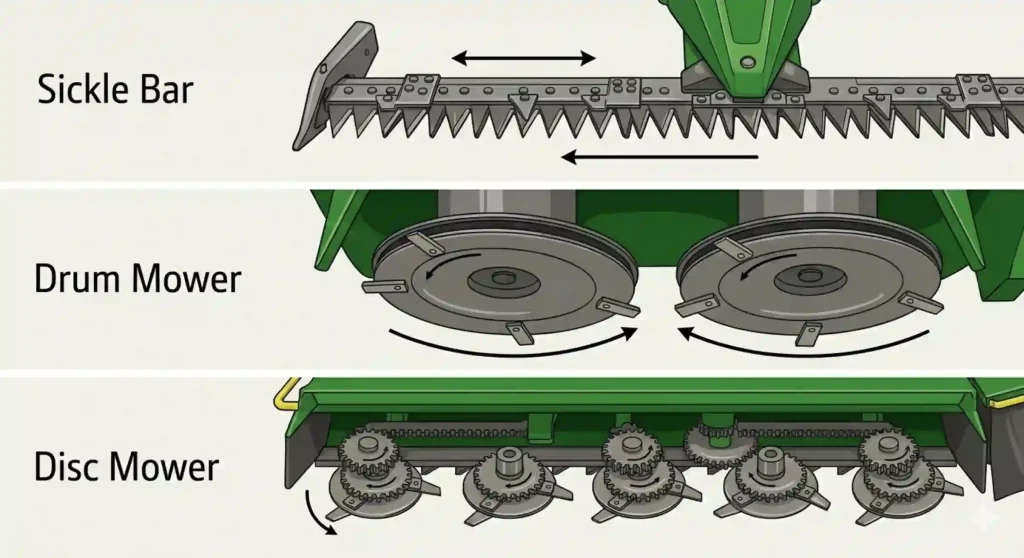
Косарка з серповидним лезом
Найстаріший з трьох. Довга горизонтальна планка несе пальцеві захисні кожухи, а між ними ковзає зворотно-поступальний ніж (ряд трикутних лез), що зрізає сіно, подібно до руху ножиць.
Серповидно-косачі ріжуть на відносно низьких швидкостях — типова швидкість руху становить 5–8 км/год. Вони механічно прості, дешеві в ремонті та дбайливі до трави. Вони також вибагливі: забиваються у вологій або густій рослинності, застрягають у вже скошеній траві та потребують ретельного регулювання, щоб їхні ріжучі кромки були вирівняні.
Більшість сучасних сінокосарок перейшли від серповидних лопатей для основного скошування, але вони залишаються цінними для підстригання трави навколо огорож, водойм та на невеликих садах, де точність важливіша за швидкість.
Барабанна косарка
Барабанна косарка використовує два (іноді три) великі барабани, що обертаються в протилежних напрямках, що приводяться в рух від редуктора. вище різальний вузол. Кожен барабан має 3–4 вільно обертаються леза навколо своєї основи. Барабани обертаються всередину один до одного, збираючи зрізану культуру у валок між ними.
Весь барабанний вузол ковзає по землі на «тарілчастому» підшипнику, який контролює висоту скошування та дозволяє газонокосарці долати перешкоди. Оскільки приводні шестерні розташовані над площиною скошування, барабанні газонокосарки добре переносять удари та рідко виходять з ладу дороговартісною коробкою передач.
Барабанні косарки вальцюють природним чином — урожай падає відносно вузькою смугою між барабанами. Це зручно для згрібання, але може уповільнити висихання без ворушіння.
Дискова косарка
Дискова косарка має кілька менших дисків (зазвичай від 6 до 10, залежно від ширини скошування) вздовж горизонтального ріжучого бруса. Кожен диск має 2 вільно обертаються леза. Диски приводяться в рух від нижче за допомогою шестерень або валу, що обертається всередині різального бруса.
Дискові косарки скошують на високих швидкостях — за хороших умов можна досягти швидкості 12–18 км/год. Вони добре справляються з густою та полеглою рослинністю, залишають рівномірний розподіл або налаштовуваний валок і домінують на професійному ринку та ринку великих фермерських господарств по всьому світу.
Їхньою слабкістю є пошкодження від удару: сильний удар об камінь або стовп огорожі може зламати диск, пошкодити ріжучу планку або зруйнувати корпус редуктора, а ремонт дискових косарок недешевий.
Швидкість різання та пропускна здатність
Найбільш помітна відмінність між цими газонокосарками полягає в тому, як швидко ви можете скосити поле.
| Тип косарки | Типова швидкість на землі | Гектарів за годину (один прохід) |
|---|---|---|
| Серповидно-колотий брусок (1,8 м) | 5–8 км/год | 0,9–1,4 га/год |
| Барабанна косарка (1,8 м) | 10–15 км/год | 1,8–2,7 га/год |
| Дискова косарка (2,4 м) | 12–18 км/год | 2,9–4,3 га/год |
| Дискова косарка (3,2 м+) | 12–18 км/год | 3,8–5,8 га/год |
Це найкращі показники для чистих, рівних полів. Поворотні смуги, повороти та нерівномірна культура знижують реальну пропускну здатність на 25–351 т³/год.
Для порівняння: скошування 100 га серповидно-ланковою косаркою з шириною захвату 1,8 м займає близько 75–85 робочих годин. Аналогічна робота дисковою косаркою з шириною захвату 3,2 м займає 18–24 години. Для комерційних підприємств ця різниця в продуктивності легко виправдовує вищу ціну дискової машини.
Вартість: ціна придбання та експлуатаційні витрати
Реальні ціни різняться залежно від регіону та бренду, але відносне позиціонування в трьох категоріях є однаковим у всьому світі.
Ціна закупівлі (орієнтовні діапазони, дол. США)
- Косарка з серповидним лезом (1,8–2,1 м): $1,500–$4,000 нових
- Барабанна косарка (1,6–2,4 м): $3 000–$8 000 нових
- Дискова косарка (2,0–2,4 м): $6 000–$15 000 нових
- Дискова косарка-плющилка (2,4–3,2 м): $15 000–$35 000+
- Дискова косарка (3,2 м+): $12 000–$25 000
Ринок уживаних товарів існує для всіх трьох, особливо доступними є серповидно-косильні апарати та старі барабанні косарки.
Експлуатаційні витрати
Картина змінюється, якщо врахувати ймовірність ремонту.
- Серповидно-колокольчатий брусок: Дешеві запчастини, часте дрібне регулювання, ножові секції потребують регулярної заміни. Низька загальна вартість на невеликій площі.
- Барабанна косарка: Вільно обертаючі леза недорогі та швидко замінюються. Ремені (на моделях з ремінним приводом) потребують періодичної заміни. Редуктори дуже довговічні. Загальна вартість від низької до помірної.
- Дискова косарка: Вільно обертаючі ножі недорогі. Однак удар об твердий предмет може пошкодити диски, ріжучий брус або зубчасту передачу, а витрати на ремонт сягають тисяч. Модульні ріжучі брусові ...
Для робіт на великих площах збільшення пропускної здатності дискової косарки більш ніж компенсує її експлуатаційні витрати. Для робіт на невеликих площах зазвичай перемагає простіша економічна перевага барабанної косарки.
Вимоги до потужності трактора
Косарки приводяться в рух від ВОМ, і відповідний трактор відповідає як ширині зрізу, так і масі косарки.
| Тип/розмір косарки | Мінімальна к.с. ВОМ | Зручний ВОМ HP |
|---|---|---|
| Серповидний пруток (1,8–2,1 м) | 25–30 к.с. | 35–45 к.с. |
| Барабанна косарка (1,6 м, 2-барабанна) | 30–35 к.с. | 45–55 к.с. |
| Барабанна косарка (2,4 м, 3-барабанна) | 50–60 к.с. | 65–75 к.с. |
| Дискова косарка (2,0 м) | 40–50 к.с. | 55–65 к.с. |
| Дискова косарка (2,4 м) | 55–65 к.с. | 70–85 к.с. |
| Дискова косарка (3,2 м) | 80–95 к.с. | 100–120 к.с. |
| Потрійні комбінації косарок | 200+ к.с. | 250–350 к.с. |
Барабанні косарки оманливо важкі — барабанна косарка з шириною захвату 2,4 м може важити 600–800 кг. Менші трактори можуть мати потужність ВОМ, але не передній баласт або вантажопідйомність для безпечного керування машиною під час транспортування.
Польові результати: де кожен перемагає
Де перемагає дискова косарка
- Великі, чисті поля з гарною видимістю та невеликою кількістю перешкод
- Важка, полегла або волога рослинність де б застрягли серповидні прути
- Преміальні сінні ринки де рівномірна висота стерні та висока стійкість листя впливають на ціни
- Робоча ширина 2,4 м+ з відповідним трактором
Якщо ваш трактор має потужність понад 60 к.с. з валом відбору потужності, а ваші поля мають площу понад 30 гектарів відносно чистої землі, дискова косарка майже завжди є правильним рішенням.
Де перемагає барабанна косарка
- Середні підприємства (10–40 га)
- Старіші або менші трактори (35–55 к.с.), де дискова косарка перевантажить задню вісь
- Кам'янисті або незнайомі поля де високий ризик пошкодження дискового верстата ударом
- Обмежені бюджети або хобі-операції, що проводяться 1–2 рази на рік
- Вологі або росяні умови де важка маса барабана продовжує різати твердий матеріал
Барабанні газонокосарки також мають тиху, але реальну перевагу: вони майже ніколи не ламаються так, що ви застрягнете. Їхні поломки є поступовими (зношені ремені, затуплення лез), а не катастрофічними.
Де перемагає серповидно-гвинтовий стрижень
- Обрізні роботи вздовж парканів, доріг, водойм
- Дуже невелика площа (менше 5 га) зі старими тракторами низької потужності
- Крутий, рельєфний рельєф де важча косарка могла б зісковзнути або дестабілізуватися
- Нішеві органічні / спадкові операції які цінують дбайливе різання
Серповидно-косильні машини не є найкращим інструментом для основного сінокосіння на більшості сучасних ферм, але вони залишаються корисною другою косаркою для завершальних робіт.
Якість скошування: утримання листя та висота стерні
Для ринків преміального сіна — експортного вівсяного сіна, молочної люцерни, сіна з тонкої трави — найважливішим показником є якість скошування, а не продуктивність.
Збереження листя. Дискові косарки, завдяки плавному, вільному руху лез та чистішому зрізу, краще утримують листя, ніж барабанні косарки, у сухих умовах. Серповиднолоскі косарки також дуже дбайливі, але повільні.
Висота стерні. Усі три косарки можна налаштувати на різну висоту стерні, але дискові косарки пропонують найточніше регулювання. Для люцерни стерня 5–7 см захищає крону від пошкоджень і сприяє швидшому відростанню. Барабанні косарки, як правило, скошують трохи нижче за ідеальну висоту, якщо їх ретельно не налаштувати.
Кондиціонування врожаю. Дискові косарки можуть бути поєднані з вальцями-плющилками або крильчатками (конфігурація «дискова» або «косарка-плющилка»), які обжимають або обробляють стебла, щоб значно скоротити час сушіння. Барабанні косарки деякі моделі можуть бути оснащені хлистовими плющилками, але плющення менш ефективне, ніж вальцеві. Серповидно-роторні косарки зазвичай використовуються з окремими блоками плющилок. Для молочних господарств, що виробляють сінаж, косарка-плющилка є золотим стандартом.
Технічне обслуговування: час роботи з гайковим ключем
Рейтинг технічного обслуговування з реальних джерел, від найменш вимогливого до найбільш вимогливого:
- Барабанна косарка — Натягування ременя двічі на сезон, заміна лез за потреби, періодичне доливання трансмісійної оливи. Мало рухомих частин.
- Серповидний брусок — Часті дрібні налаштування, заміна ножа та захисного кожуха, але запчастини дешеві, а робота виконується швидко.
- Дискова косарка — Менш часте звернення, але коли щось йде не так, робота стає складнішою, а запчастини дорожчими. Перевірка оливи різального бруса, перевірка модуля диска, заміна леза, повторне затягування болтів ножа.
Для операторів, які менш схильні до механіки, барабанна косарка має перевагу в тому, що вона майже прощає недоліки. Дискові косарки винагороджують операторів, які дотримуються графіка оглядів, і карають тих, хто цього не робить.
Чітка структура рекомендацій
Ось як би ми це підготували для міжнародного покупця, який створює нову лінійку сінокосіння:
Якщо у вас невелика ферма (менше 15 га), трактор потужністю 35–55 к.с., і вам потрібне здебільшого сіно для власної худоби:
Купіть барабанну косарку з шириною захвату 1,6–2,0 м. Вона скошує вашу ділянку за день, служитиме багато років, і вам рідко доведеться когось викликати.
Якщо у вас ферма середнього розміру (15–50 га), трактор потужністю 55–85 к.с., і ви продаєте сіно:
Підійдуть як дискова косарка з шириною завширшки 2,4 м, так і барабанна косарка з шириною завширшки 2,4 м. Дискова косарка швидше окупається на більшій площі; барабанна косарка прощає більше витрат у складних умовах.
Якщо у вас велике підприємство (50+ га) або ви є підрядником:
Стандартом є дискова косарка-плющилка з шириною захвату 3,0 м+. Зверніть увагу на модульні конструкції різального бруса для зручності обслуговування.
Якщо ви ведете хобі-ферму площею менше 5 га або вам просто потрібно косити траву під косу:
Вживана серповиднокосарка з шириною захвату 1,8–2,1 м – це цілком гарне рішення.
Часті запитання
З: Що краще для невеликих ферм: барабанна чи дискова косарка?
A: Для більшості невеликих ферм (до 30 га) барабанна косарка є кращим економічним вибором — нижча ціна придбання, простіше обслуговування та менша шкода від ударів.
З: Чи можна використовувати дискову газонокосарку для скошування трави навколо перешкод?
A: Дискові косарки не ідеально підходять для скошування вузької трави. Їхня широка ширина зрізу та вартість пошкоджень від удару роблять серповиднокосарку (або невелику косарку-цеп) кращим інструментом для цієї роботи.
З: Чи потрібна мені косарка-плющилка?
В: Для молочних ферм, що виробляють сінаж, так — етап кондиціонування може скоротити час сушіння на півдня. Для сухого сіна, що продається на ринки коней або яловичини, може бути достатнім використання звичайних косарок з роздільним ворушінням.
З: Як часто потрібно замінювати леза дискової косарки?
A: Вільно-поворотні леза зазвичай служать 200–600 гектарів залежно від умов. Леза недорогі, але болти кріплення необхідно перевіряти на міцність при кожній заміні.
З: Чому барабанні газонокосарки такі популярні в одних країнах, а в інших — ні?
В: Барабанні косарки були європейською розробкою та залишаються домінуючими у більшій частині Східної Європи, деяких частинах Азії та регіонах малих фермерських господарств по всьому світу. Великі фермерські господарства Північної Америки та Австралії значною мірою стандартизували використання дискових косарок через їхню пропускну здатність.
Наступний крок
Вибір правильної газонокосарки – це основа кожного кілограма сіна, який ви тюкуєте протягом сезону. Якщо ви хочете порівняти конкретні моделі для вашого трактора та площі, перегляньте наш Серія косарок — на кожній сторінці товару вказано робочу ширину, вимоги до потужності ВОМ, вагу та рекомендовані категорії тракторів.
Після того, як ви обрали газонокосарку, наступним рішенням буде те, як зібрати скошену рослинність у валки. Дивіться наш супровідний посібник: Колісні граблі проти роторних граблів проти дворядних граблів: який валок підходить для вашого прес-підбирача?
Про автора: Цей посібник був написаний технічною командою компанії Australia baler-hay Co., Ltd, міжнародного постачальника обладнання для сінокосіння з цілодобовою технічною підтримкою для експортних покупців по всьому світу.