
اگر برای اولین بار است که یک واحد علوفهچینی راهاندازی میکنید - یا واحد موجود را گسترش میدهید - انتخاب تجهیزات میتواند طاقتفرسا به نظر برسد. ماشینهای چمنزنی، دستگاههای تهویه، دستگاههای علفزن، چنگک، بستهبندی، دستگاههای بستهبندی، تریلر و دستگاههای خردکن علوفه وجود دارند که هر کدام در انواع و کلاسهای قیمتی مختلف موجود هستند و هر کدام نقش خاص خود را در زنجیره دارند.
این راهنما کل گردش کار چیدن علوفه را به عنوان یک سیستم متصل واحد بررسی میکند. هدف این است که به شما کمک کند تا بفهمید هر دستگاه چگونه در بستهبندی نهایی نقش دارد، هر مرحله شامل چه بدهبستانهایی است و چگونه میتوانید یک ترکیب متعادل برای سطح زیر کشت و محصول خود ایجاد کنید.
ما در اینجا برندهای خاصی را توصیه نمیکنیم. در عوض، موارد زیر را پوشش خواهیم داد: اصول ایجاد یک مجموعه تجهیزات متعادل، به همراه لینکهایی برای مقایسه عمیقتر محصولات در سراسر مجموعه.
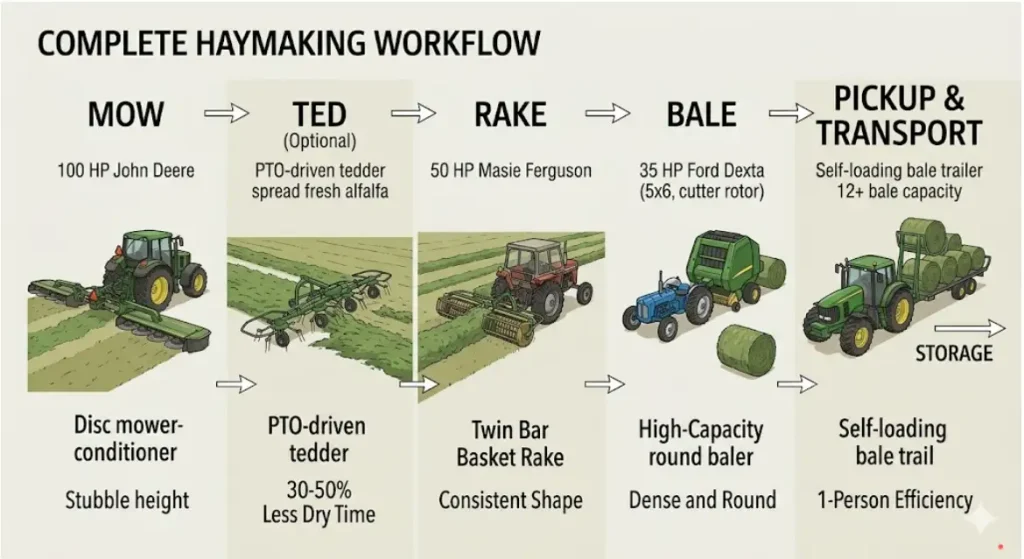
فرآیند پنج مرحلهای چیدن یونجه
بیشتر عملیات جمع آوری یونجه از یک توالی اساسی پیروی میکنند:
- مو — هرس کردن محصولات سرپا در مزرعه
- تد (اختیاری اما توصیه میشود) - محصول بریده شده را پخش کنید تا خشک شدن آن تسریع شود
- با چنگک - محصول خشک شده را به صورت ردیفی جمع آوری کنید
- بیل - از محصول ردیف شده، عدل تشکیل دهید
- وانت و حمل و نقل - عدلها را از مزرعه به انبار منتقل کنید
دو شاخه تخصصی در کنار این جریان اصلی قرار دارند:
- فرآوری علوفه - برای عملیات تغذیه با علوفه سیلو شده و جیره کاملاً مخلوط (TMR)
- برداشت تخصصی - برای سویا و حبوبات مشابه که نیاز به بالابر دارند
ما هر مرحله را پوشش خواهیم داد، سپس همه را با مثالهایی از ترکیببندیها برای اندازههای مختلف مزرعه کنار هم قرار میدهیم.
مرحله ۱: چمنزنی - اساس کیفیت عدل
ماشین چمنزنی کل فرآیند را آغاز میکند. کیفیت برش بر هر مرحلهی بعدی تأثیر میگذارد:
- ارتفاع ته ریش بر رشد مجدد، تماس با خاک و کیفیت برش بعدی تأثیر میگذارد
- تمیزی برش بر حفظ برگ و ارزش غذایی تأثیر میگذارد
- سرعت ماشین چمن زنی حد بالای ظرفیت روزانهی جمعآوری یونجهی شما را تعیین میکند
- تهویه مطبوع (در صورت وجود) زمان خشک شدن را کاهش میدهد، گاهی اوقات ۱۲ تا ۲۴ ساعت
سه نوع اصلی ماشین چمنزنی در عملیات مدرن یونجهچینی استفاده میشوند:
- ماشینهای چمنزنی دیسکی - سرعت بالا، ظرفیت میدانی زیاد، استاندارد برای عملیات تجاری
- ماشینهای چمنزنی استوانهای - سادهتر، بادوامتر، کمهزینهتر - محبوب برای مزارع کوچک تا متوسط
- ماشینهای چمنزنی داسی شکل — قدیمی، ملایم، آهسته — کاربرد ویژه امروزی
ماشین اصلاح چمن واحدهایی وجود دارند که غلتکها یا پروانههای حالتدهندهای را اضافه میکنند که ساقهها را فشرده کرده و زمان خشک شدن را کاهش میدهند. برای کارخانههای لبنیاتی که یونجه تولید میکنند و برای بازارهای یونجه مرغوب، یک دستگاه حالتدهنده-موور انتخاب استاندارد است.
مرور خط تولید: سری ماشین چمن زنی
مرحله ۲: تدینگ - تسریع خشک شدن
تدینگ (یا چیدن علف خشک) مرحلهای است که در برداشت یونجه بیشترین غفلت را دارد و نباید هم داشته باشد. تدلر وسیلهای است که با نیروی محور PTO کار میکند و دارای دندانههای چرخان است که محصول بریده شده را بلند و پخش میکند و سطح بیشتری را در معرض آفتاب و باد قرار میدهد.
چرا تد؟ یونجهای که در ردیفهای چمنزنی چیده میشود، از بالا به پایین خشک میشود. رطوبت در داخل ردیفها برای ساعتها بیشتر باقی میماند. کوددهی در عرض چند ساعت پس از چمنزنی میتواند زمان خشک شدن کامل را به میزان 30 تا 50 درصد کاهش دهد، به خصوص در شرایط خنک یا مرطوب.
چه زمانی تدینگ ضروری است:
- یونجه سنگین برای اولین بار برداشت شده
- شرایط خنک و مرطوب
- دستههای چمنزنی استوانهای (که محکم و متراکم قرار میگیرند)
- فصول مرطوب که در آن هر ساعت خشک شدن اهمیت دارد
چه زمانی میتوان از تدینگ صرف نظر کرد:
- آب و هوای گرم و خشک با محصول سبک
- نوارهای چمنزنی که به خوبی از دستگاههای اصلاحکننده چمنزنی دیسکی پخش شدهاند
- عملیات تولید سیلو/هیلاژ که در آن محصول عمداً فقط تا حدی پژمرده میشود
برای عملیات لبنی که یونجه تولید میکنند، منطق پژمردن برعکس است - شما میخواهید مواد را تا رطوبت حدود ۶۰ درجه سانتیگراد پژمرده کنید، نه اینکه کاملاً خشک شوند. پژمردن را بر این اساس برنامهریزی کنید.
بیشتر واحدهای کشت در حال رشد، برای یک یا دو سال اول از دستگاه کِدِر (دستگاه جمعکنندهی کود) استفاده نمیکنند؛ در نهایت، اکثر آنها یکی اضافه میکنند زیرا افزایش توان عملیاتی واقعی است.
مرحله ۳: چنگک زدن - ساختن ردیفی که دستگاه بستهبندی شما جمع خواهد کرد
چنگک، محصولات پژمرده یا خرد شده را به صورت دستههایی جمع میکند که برای تغذیهی دستگاه بستهبندی شکل گرفتهاند. همانطور که در مقالهی همراهمان به تفصیل به آن پرداختیم، شکل دستهها مستقیماً شکل و تراکم بسته را تعیین میکند.
سه نوع چنگک اصلی برای عملیات مختلف استفاده میشوند:
- چنگکهای چرخدار - روش زمینی، سریع، کمهزینه، اما با محتوای خاکستر بالاتر
- چنگکهای چرخشی - با موتور PTO، ملایم، کمترین میزان خاکستر، سرعت میدانی کمتر
- چنگکهای دو میلهای (سبدی) — هیدرولیک، یک ردیف مربعی شکل ایجاد میکند که برای بستهبندیهای بزرگ ایدهآل است
چنگکی که برای عملیات شما خیلی کوچک باشد، یک گلوگاه است. چنگکی که برای تراکتور شما خیلی بزرگ باشد، سرمایه از دست رفته است. به عنوان نقطه شروع، عرض کاری چنگک باید ۲ تا ۴ برابر عرض کاری ماشین چمنزنی شما باشد. — این کار ۲ تا ۴ مسیر ماشین چمنزنی را در یک ردیف برای دستگاه بستهبندی جمع میکند.
پیوند داخلی: شنکش چرخی در مقابل شنکش دوار در مقابل شنکش دو میلهای: کدام نوع شنکش برای دستگاه بستهبندی شما مناسب است؟
مرور خط تولید: سری شنکش یونجه
مرحله ۴: عدلبندی - بستهبندی یونجه برای ذخیرهسازی و حمل و نقل
دستگاه بستهبندی معمولاً گرانترین دستگاه در خط تولید است و مسلماً مهمترین تصمیم استراتژیک در این زمینه محسوب میشود.
دو نوع عمده عدل در سراسر جهان غالب هستند:
عدلهای گرد — استاندارد جهانی برای علوفه و یونجه مرغوب
- سهولت در انجام عملیات توسط یک نفر
- مقاومت بهتر در برابر آب و هوای بیرون
- ظرفیت بالاتر به ازای هر ساعت کار
- بهترین گزینه برای ذخیره سازی حجم زیاد
عدلهای مربعی (کوچک یا بزرگ) - رایج در یونجه اسب، یونجه صادراتی و برخی لبنیات
- برای حمل و نقل، چیدمان را کارآمدتر کنید
- برای تغذیه در مقیاس کوچک، راحتتر میتوان با دست آن را جابجا کرد
- تراکم بالاتر با دستگاه های بسته بندی مربعی بزرگ امکان پذیر است
– بهترین حالت زمانی است که راندمان حمل و نقل بیش از جابجایی اهمیت دارد
بیشتر کارخانههای کشت، دستگاههای بستهبندی گرد را به عنوان دستگاه اصلی خود انتخاب میکنند. در مورد دستگاههای بستهبندی گرد، تصمیمات اصلی عبارتند از:
- محفظه ثابت در مقابل محفظه متغیر - روش ثابت، عدلهایی با هسته نرمتر تولید میکند؛ روش متغیر، چگالی ثابت و اندازه قابل تنظیم ایجاد میکند.
- سیستم گره زدن - ریسمان، تور یا ترکیبی از آنها
- عرض برداشت — باید با عریضترین ردیف پنجره شما مطابقت داشته باشد
- سازگاری با محصول - فقط یونجه خشک، یا قابلیت سیلو کردن/کاه
برای عملیات سیلو کردن، ممکن است به موارد زیر نیز نیاز داشته باشید: بسته بندی عدل پایین دست دستگاه بستهبندی. برخی از تولیدکنندگان، ترکیبهای یکپارچهای از دستگاه بستهبندی و بستهبندی ارائه میدهند.
پیوند داخلی: نحوه انتخاب یک دستگاه پرس عدل بندی گرد: 7 ویژگی کلیدی که خریداران بین المللی اغلب نادیده می گیرند
مرور خط تولید: سری بیلر گرد
مرحله ۵: جمعآوری و حمل و نقل - رساندن عدلها به انبار
بستههای گردی که در مزرعه رها شدهاند، دارایی محسوب نمیشوند؛ آنها در حال کار هستند. انتقال آنها به انبار به طور کارآمد و ایمن، هم برای بهرهوری و هم برای ارزش محصول اهمیت دارد.
گزینههای اصلی تجهیزات:
لودر جلویی با نیزه عدل یا چنگک. سادهترین روش - هر مزرعه باید حداقل یک نیزه عدل داشته باشد. محدود به یک عدل در هر زمان، کند برای عملیات بزرگ.
تریلرهای وانت عدل / واگنهای عدل. ابزارهای یدککشی که چندین عدل (معمولاً ۸ تا ۱۴ عدل گرد) را برمیدارند و در یک سفر حمل میکنند. پاسخ مناسب برای هر عملیاتی فراتر از مقیاس سرگرمی.
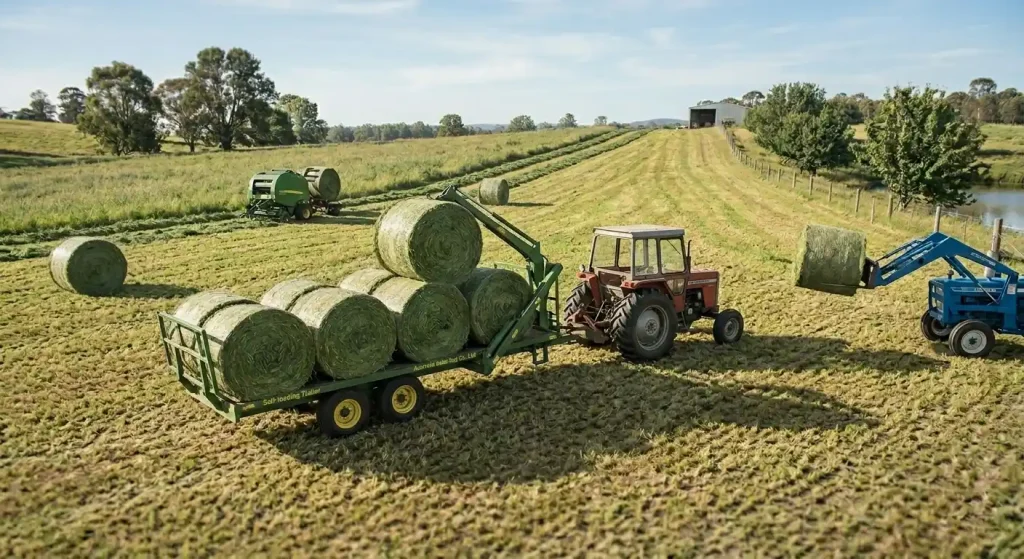
تریلرهای عدل بندی خودبارگیر. طرحهای پیشرفتهتر که بدون ترک کابین، عدلها را جمعآوری میکنند. بازگشت سرمایه سریع برای عملیات با توان عملیاتی بالا.
تریلرهای کفی. برای حمل و نقل جادهای در مسافتهای طولانی، عدلها با یک لودر جداگانه بارگیری و بستهبندی میشوند.
برای عملیات تجاری، مرحله جابجایی و حمل و نقل عدل جایی است که هزینه نیروی کار به وضوح خود را نشان میدهد. یک تریلر خودبارگیر که به یک اپراتور اجازه میدهد به جای ۱۵ عدل، ۶۰ عدل را در یک ساعت جابجا کند، خروجی روزانه یک تیم کوچک را متحول میکند.
مرور خط تولید: تریلر حمل و نقل و جمع آوری بیل
شاخه الف: فرآوری علوفه - برای عملیات سیلو کردن و TMR
عملیات سیلو کردن علوفه و مزارع لبنی، تجهیزات اضافی را به گردش کار اساسی تهیه علوفه اضافه میکنند. ابزار اصلی، ماشین برداشت علوفه یا خردکن علوفهکه محصول را برش داده و آن را به طول ذرات مشخص و مناسب برای تخمیر خرد میکند.
برای عملیات مخلوط کردن جیره:
- خردکن علوفه / کاه خردکن - کاه، یونجه و ساقههای خشک را به قطعات کوتاه و یکنواخت (معمولاً ۱ تا ۵ سانتیمتر) خرد کنید تا به راحتی با خوراک کاملاً مخلوط (TMR) مخلوط شوند.
- میکسرهای TMR - علوفه خرد شده را با غلات، مکملها و افزودنیها مخلوط کرده و یک جیره کامل تهیه کنید.
خردکنهای علوفه به ویژه برای موارد زیر ارزشمند هستند:
- کارخانههای گوشت و لبنیات که از کاه و یونجه خود به عنوان مواد تشکیل دهنده TMR استفاده میکنند
- انتقال عملیات از خوراک خریداری شده به خوراک تولید شده توسط خود دامداران
- عملیات پرواربندی که در آن طول ذرات ثابت، مصرف و تبدیل را بهبود میبخشد
نسخه سیلوی ذرت همین گردش کار از یک پردازنده هسته - یک جفت غلتک شیاردار که هستهها را میشکنند - برای بهبود هضم نشاسته استفاده میکند. طول ذرات مهم است: اگر خیلی بلند باشد، نشخوار ناقص است؛ اگر خیلی کوتاه باشد، عملکرد شکمبه مختل میشود.
مرور خط تولید: سنگ شکن علوفه
شاخه ب: برداشت تخصصی - محصولات سویا و حبوبات
سویا و حبوبات مشابه در بسیاری از نقاط جهان در همان مزارعی کشت میشوند که یونجه در آنها کشت میشود و برای برداشت تمیز آنها به متخصصان مخصوص به خود نیاز است.
بالابرهای لوبیا اتصالات سرشاخهای هستند که برای بلند کردن گیاهان سویای خوابیده یا کم غلاف، جلوتر از تیغه برش طراحی شدهاند. مزایا:
- جمع آوری غلاف هایی که در غیر این صورت زیر ارتفاع برش قرار می گیرند
- کاهش تلفات میدانی (اغلب ۵-۱۵۱TP3T بازیابی میشود)
- برش تمیزتر روی محصول آسیب دیده از آب و هوا یا آسیب دیده از خواب
- اتکای کمتر به وضعیت بینقص محصول
برای عملیات ترکیبی که شامل برداشت یونجه و حبوبات میشود، بالابر لوبیا یک وسیلهی نسبتاً کمهزینه است که به طور معناداری اقتصاد برداشت را در محصولات کوتاهمدت یا خوابیده بهبود میبخشد.
مرور خط تولید: سری بالابر لوبیا
کنار هم قرار دادن: مثالهایی از چیدمان تجهیزات بر اساس اندازه عملیات
مزرعه تفریحی (زیر ۱۰ هکتار)
- ماشین چمنزنی درام ۱.۶ تا ۱.۸ متری
- چنگک چرخدار ۴ تا ۶ متری
- دستگاه بستهبندی گرد کوچک (سایز ۴×۴ یا ۴×۵)
- لودر جلویی با نیزه عدل
این خط تولید با تراکتوری با قدرت ۳۵ تا ۵۵ اسب بخار کار میکند و سالانه ۲۰۰ تا ۸۰۰ عدل گرد تولید میکند. هزینه کل تجهیزات متوسط است و همان تراکتور همه کارها را انجام میدهد.
مزرعه متوسط (۱۰ تا ۵۰ هکتار)
- ماشین چمنزنی دیسکی ۲.۴ متری (یا ماشین چمنزنی درام ۲.۴ متری برای بودجه محدودتر)
- چنگک چرخدار گاریدار ۶ متری یا چنگک چرخشی ۴ تا ۵ متری
- دستگاه بستهبندی گرد سایز متوسط (۴×۵ یا ۵×۵)
- تریلر جمع آوری عدل (با ظرفیت ۸ تا ۱۰ عدل)
- اختیاری: دستگاه علفچین برای عملیات جمعآوری یونجه مرغوب
این خط تولید معمولاً با تراکتور ۶۵ تا ۸۵ اسب بخار کار میکند و سالانه ۸۰۰ تا ۳۰۰۰ عدل گرد تولید میکند.
مزرعه تجاری (۵۰ تا ۲۰۰ هکتار)
- ماشین چمنزنی دیسکی-کاندیشنر ۲.۸ تا ۳.۲ متری
- چنگک چرخشی دو روتوره یا چنگک دو میلهای ۸ تا ۱۰ متری
- دستگاه بستهبندی گرد با ظرفیت بالا (5×6 با روتور برش)
- تریلر عدلبندی خودکار (ظرفیت ۱۲+ عدل)
- تدر
- اختیاری: بستهبندی عدل برای عملیات جمعآوری علوفه
این خط تولید به تراکتوری با قدرت ۸۰ تا ۱۲۰ اسب بخار (برای بزرگترین دستگاههای دیسکی چمنزن-کاندیشنر، قدرت بیشتری لازم است) نیاز دارد و سالانه ۳۰۰۰ تا ۱۰۰۰۰ عدل تولید میکند.
پیمانکار/ عملیات عدلبندی سفارشی
- ترکیب سهگانه چمنزن ۳.۲ متری یا دو چمنزن دیسکی ۲.۸ متری
- چنگک میلهای دوقلو ۱۲ تا ۱۴ متری
- دستگاه بستهبندی گرد مرغوب (یا دستگاه بستهبندی مربعی بزرگ)
- تریلر عدل بندی خودکار با ظرفیت بالا
- واحد بستهبندی عدل اختصاصی
سرمایهگذاری تجهیزات قابل توجه است، اما اقتصاد هر عدل به دلیل حجم خدمات ارائه شده به چندین مشتری، جواب میدهد.
کشت مخلوط (یونجه + سویا + لبنیات)
به ترکیب میانرده یا تجاری بالا اضافه کنید:
- دستگاه جمع آوری لوبیا برای برداشت سویا
- خردکن علوفه برای فرآوری خوراک دام
- میکسر TMR (خرید جداگانه) برای تغذیه روزانه
چند اصل برای چیدمان ترکیب تیمتان
۱. دستگاه بستهبندی را آخر از همه بخرید، نه اول. بسیاری از کشاورزان به دستگاه بستهبندی تکیه میدهند و سعی میکنند بقیهی تجهیزات را در اطراف آن قرار دهند. راه درست این است که ابتدا اندازهی دستگاه خود را مشخص کنید، سپس اندازهی دستگاه را تعیین کنید. چنگک برای مطابقت با ردیفی که دستگاه بستهبندی شما نیاز دارد، سپس ماشین چمن زنی برای مطابقت با عرض کاری چنگک، سپس تراکتور برای جابجایی بزرگترین وسیله.
۲. ظرفیت تراکتور، سقف بیصدای ترکیب شماست. اگر تراکتور شما نتواند دستگاه بستهبندی علفهای هرز بزرگتر را با خیال راحت از تپه بالا بکشد، بیفایده است. اگر سیستم هیدرولیک شما نتواند علفهای هرز را برای حمل و نقل تا کند، یک ماشین چمنزنی پهنتر بیفایده است. ادوات را با تراکتوری که دارید مطابقت دهید.
۳. برای سرویس و قطعات یدکی برنامهریزی کنید. اگر در فصل اوج مصرف نتوانید تسمه جایگزین پیدا کنید، یک ترکیب متعادل بیمعنی است. قبل از خرید، مخصوصاً برای خریداران صادراتی، از موجودی قطعات و زمان تحویل برای هر دستگاه اطمینان حاصل کنید.
۴. توان عملیاتی باید در سراسر زنجیره متعادل باشد. یک ماشین چمنزنی پرسرعت که با یک چنگک کند جفت شده باشد، فقط صفی از یونجه خشک ایجاد میکند که منتظر چنگک زدن است. ظرفیت مزرعه (هکتار در ساعت) را در هر چهار مرحله در محدوده ±25% تطبیق دهید.
۵. تجهیزات دست دوم یک گزینه واقعی هستند. به خصوص برای دستگاههای بستهبندی، چنگک و بستهبندیهای کوچک، بازار دست دوم در سراسر جهان رونق دارد. دستگاههای نو برای عملیات پرمصرف و برای خریدارانی که به پشتیبانی کامل گارانتی نیاز دارند، مناسب هستند. دستگاههای دست دوم میتوانند برای استفادههای گاه به گاه، ارزش بسیار خوبی داشته باشند.
سوالات متداول
س: حداقل تجهیزات برای شروع یک عملیات یونجه سازی چیست؟
الف) ماشین چمنزنی، چنگک، عدلزن و عدلچین/بارگیر. تیدر و تریلر تجهیزات جانبی مفیدی هستند اما برای عملیات کوچک ضروری نیستند.
س: آیا به دستگاه بخور نیاز دارم؟
الف) الزاماً لازم نیست، اما زمان خشک شدن را به میزان قابل توجهی کاهش میدهد و در آب و هوای خنک/مرطوب ماندگاری خود را حفظ میکند. بسیاری از پرورشدهندگان در فصل دوم یا سوم، یک دستگاه علفزن (tedder) اضافه میکنند.
س: برای اجرای یک خط کامل برداشت یونجه به چه اندازه تراکتور نیاز دارم؟
الف) برای یک مزرعه کوچک، یک تراکتور با قدرت ۵۰ تا ۶۰ اسب بخار به راحتی میتواند ماشین چمنزنی، چنگک چرخی و دستگاه بستهبندی گرد کوچک را مدیریت کند. برای یک مزرعه متوسط، تراکتوری با قدرت ۷۵ تا ۹۵ اسب بخار برنامهریزی کنید. تراکتورهای تجاری به بیش از ۱۰۰ اسب بخار نیاز دارند.
س: آیا میتوانم علوفه خشک را با یک دستگاه بستهبندی گرد معمولی بستهبندی کنم؟
الف) اکثر دستگاههای بستهبندی گرد مدرن، در صورت داشتن رتبهبندی مناسب، میتوانند علوفه خشک/سیلو را نیز جابجا کنند. از سازنده تأیید کنید که محفظه، تسمهها و یاتاقانها مخصوص سیلو هستند و برای بستهبندی در پایین دست برنامه ریزی کنید.
س: یک مجموعه کامل از تجهیزات چقدر دوام میآورد؟
الف) با نگهداری مناسب و استفاده معقول، چمنزنها و چنگکها معمولاً 10 تا 20 سال دوام میآورند. دستگاههای بستهبندی بیشتر استفاده میشوند و ممکن است در 15+ سال نیاز به سرویس یا تعویض اساسی داشته باشند. تریلرها میتوانند دههها دوام بیاورند.
مرحله بعدی
یک مجموعه متعادل از تجهیزات علوفهچینی از سه طریق هزینه خود را جبران میکند: کار سریعتر در مزرعه، کیفیت بالاتر عدل و هزینه کمتر نیروی کار برای هر عدل. فهرست کامل ما را مرور کنید تجهیزات یونجه سازی برای مشاهده طیف وسیعی از ماشینهای چمنزنی، چنگک، بستهبندی، تریلر، دستگاه پرس علوفه و بالابر لوبیا که برای خریداران صادراتی موجود است.
اگر مایلید یک توصیه کتبی برای تجهیزات متناسب با سطح زیر کشت، ترکیب محصولات و تراکتور موجود خود دریافت کنید، با تیم فنی ما تماس بگیرید و ما ظرف ۲۴ ساعت پاسخ خواهیم داد.
درباره نویسنده: این راهنما توسط تیم فنی شرکت استرالیایی بیلر-هی (Australia baler-hay Co., Ltd)، یک تأمینکننده بینالمللی تجهیزات علوفهچینی با پشتیبانی فنی 24 ساعته برای خریداران صادراتی در سراسر جهان، نوشته شده است.